St. Patrick’s Society Charity Night 2013

Last week, I attended an event that gave me an up-close experience of how many good people are out there. It was a totally enlightening night, a gleam of light amidst this world full of tragedy and heart-breaking news. 

St. Patrick’s Society of Selangor is a non-profit organization, promoting the social life and community of Irish people and people with Irish connections in Malaysia. They have social and cultural events while strongly involved in organizing charity events to raise funds for orphanages and other groups.  

St. Patrick organized a charity night last 11th of May held at the Irish ambassador’s residence in Jalan Ampang Hilir. Interesting items for the silent auction were displayed by the foyer, together with auction sheets where guests can easily write their names and bid price. Some of the items for silent auction were these amazing paintings:


All of the items for sale at the event were donated by members, local businesses and other groups who share the same vision with St. Patrick’s Society. So this means all the proceeds will go to the charity funds and will be awarded to the beneficiary group of this event. It’s really amazing. And look at these paintings! Kudos to the artist of these really unique images. These surely took a considerable amount of time to create and the style is simply beautiful. 

Before the program started, guests arrived and registered with the reception team. For the benefit of this charity event, all guests have to buy their tickets for drinks which include soft drinks, beer, wine and other liquor. Food was ready to be served, which, as I learned, was also fully sponsored by one of the society’s members. And mind you, the food looked really great, served by a caterer. I managed to try some of the dishes later that night and they really had good stuff. 


Each table was prepared with wine glasses, a free bottle of wine and event information sheets. 

On another table was an artist who worked on a seriously impressive piece of artwork. The artist, Melanie Bayoud, started from a blank sheet of paper and her finished artwork of a Celtic harp drawing was auctioned on the night itself as well. 


Soft drinks, beer, wine and other liquors were also sponsored. Tables serving the drinks were waiting next to the food banquet. One of the sponsors was Wine Talk who provided wines through wine tickets purchased at the reception and another box of wine for live auction. Here was Wine Talk’s sommelier, David Stephan, with St. Patrick’s Society members, Tony and Cherry Beadsworth:


The program started with introduction from the organizers and a brief discussion about the beneficiary of the charity event, the Chin Student Organization (CSO). 

Education is important to everyone. Unfortunately, not all are fortunate enough to be given  the right to education. The CSO is a voluntary organization created to meet the needs of Chin refugee children. It was formed in March 2005 by a small group of Chin university students who came to Malaysia in search of a secured and safer life away from the turmoil of Myanmar. They aim to provide education to the Chin refugee children who are not eligible for formal education in Malaysia.

All the teachers are working as volunteers to teach these children. But aside from education, the organization also needs to provide meals, school items and other basics, especially uniform. Some people might think that uniform is a small thing and shouldn’t be a priority but for refugees, having a uniform is important as this gives an instant recognition that they belong to a school or a group. This will protect them from being taken away, mistakenly captured or other worse possibilities. In a world where children are helpless, safety measures save lives. 

Food is definitely a priority as well. Children need to have their basic meals provided, including milk. My son is highly dependent on milk for nutrition and I know how important milk is to growing children. It’s a challenge at the moment for CSO as they don’t have sufficient funds to provide milk daily. 

Some of the children from CSO were at the event and gave a short presentation. Each student shared a short experience and what they hope for in the future. This was a highlight of the event and gave everyone a heart-warming moment, hearing each child’s thought and hope in their lives. 


The evening continued with dinner for everyone and the live auction where the society members gave more donations to the charity. 


I was really surprised that a charity event could be so lively and fun. Everybody seemed to be having a good time. But on top of it all, I am amazed at how generous these people are. The members of St. Patrick’s Society are such a blessing to these refugee children. Couldn’t there be more of them in this world? The event raised more than RM150K plus 100 uniforms and a new sewing machine for crafts! This will make a valuable difference to these children and their lives.
As a mother who works her way through life to provide a good future for her child, I cannot imagine my son not having a chance to good education or even milk everyday. To Chin Student Organization, to St. Patrick’s Society of Selangor, to the Irish Embassy and to all who supported this event, may you all succeed in making this world a better place to live in for more children. You make miracles for each child and for their loved ones. 

To know more about CSO, check out their site:

To know more about St. Patrick’s Society, check out their site:


Screw Cap or Cork?

(image from net)
Being a wine newbie (okay, I’m not so much of an idiot anymore after 4 months in a wine-related job, huh), I’ve been wondering what’s the deal with the wine bottle cap. I believe that, generally, a lot of people believe that a cork means that the wine is of better or higher quality, hence, would taste better. But this seemed to be a misconception, as I have learned from our wine sommelier. 
A bit of info on corks first. Wine corks can be a single piece of cork or composed of many small particles. A cork made of particles are referred to as ‘technical cork’. 
Single Piece of Cork
(image from net)
Technical Cork
(image from net)
On a technical cork, you can see that the top and bottom has lines, showing the cork discs placed on each end. 
Majority of corks across the globe come from Portugal; some come from Spain and Italy. Cork has a lot of uses aside from wine stoppers:  floor and wall tiles, shuttlecocks, fishing rod handles and musical instruments. 
Both have their one benefits, pros and cons. Cork has been the wine stopper used by winemakers for hundreds of years. It comes from a renewable source because cork can be harvested from the bark of the cork tree without harming or killing it. Amazing. Winemakers use cork as wine closure for a lot of reasons, among which include the following:
  • Cork is light and low in density.
  • Cork is compressible and flexible. It can be compressed to half its width without expanding its length and still maintain its flexibility. 
  • Cork is resistant to moisture penetration. Despite its lightness and flexibility, it doesn’t allow water or moisture to get in (or out). 
  • Cork retains its properties despite extreme temperatures and lasts for years without deterioration.
  • Cork is biodegradable. 

But cork is not perfect. Corked wine, as you may have guessed, is caused by the cork. No, corked wine doesn’t mean that there are small particles of cork on the wine. Corked wine refers to a wine that has been contaminated with cork taint. Cork taint is caused by the presence of a chemical compound called TCA or 2,4,6-trichloroanisole. This TCA is formed when naturally-occurring airborne fungi combine with chlorinated phenolic compounds, substances which can also be found in pesticides, bleaches and preservatives. This cork taint affects the smell and taste of wine. Although it is not harmful or poisonous (don’t worry, you won’t get sick from corked wines), nobody would really want to drink wine that is corked.
Screw cap is a metal cap that screws the neck of a wine bottle with a metal skirt in a length meant to resemble the wine foil. In Australia and New Zealand, screw caps are now used more widely than corks. Winemakers use screw caps for these reasons (and more):
  • Screw caps prevent cork taint since there is no cork which might be contaminated with TCA
  • Screw cap is modern while cork is viewed as traditional
  • Screw caps are more consumer-friendly, can easily be opened with bare hands, without the need for bottle openers
  • Screw caps are easier to put back when you need to cover the bottle again while some corks can be difficult to put back in

So what’s the deal then on wines with screw caps and corks? 
It’s more of consumer perception and preference, I would say. Until now, a lot of people still perceive wines with screw caps to be cheaper or of less quality than wines with cork. Some are also looking for that cork ‘popping’ sound which goes with the celebration mood of opening a bottle of wine. While screw caps are undermined for the quality, it doesn’t really compromise the taste and aging ability of the wines as opposed to corks, as a lot of winemakers who have embraced screw caps would say. Australia and New Zealand produce great wines and their market are huge makers of screw-capped wines. 
In terms of convenience, I personally vote for screw cap. Based on experience, corks can sometimes be annoying, especially when you’re not really good at removing them. There’s a chance for you to break the cork while using the bottle opener then it all breaks and drops to the wine. And, of course, you need a bottle opener with cork. Screw caps are convenient. I can bring it to a party without having to bring an opener or asking if the party host has one. 
I’m not saying I’m opposed to corks at all. There are instances when corks change the entire presentation and mood with wines. Champagnes or sparkling wines, for me, are still best served by corked bottles. That ‘pop’ is just a classy factor with bubblies! But, again, the ‘pop’ does not ensure great  quality. 
As a consumer, I would suggest fellow wine drinkers to choose wines based on what you read on the label and good advice from a sommelier instead of looking at the cap. Taking note of food that you will dine your wine with is also important. If you’re not sure of what wines to serve, I strongly suggest getting advice from the experts. Find a good sommelier you can talk to. Or better yet, start exploring more wines for yourself and identify which ones (and which aren’t) are great.

Don’t judge the wine bottle by its cap. Cheers!

Great Exercise Books for Toddlers

Just this January, I entered into another exciting phase of ‘mummy-hood’…sending my child to his first school. I actually had some nervousness about this phase as I have heard of challenges on leaving a child for the first time in a new place where he doesn’t know anyone. And to leave him there even for a few hours was still heart-breaking for me.  

The first day was probably the toughest. I even took leave from work just to be ready and on-call at any time of the day, if in case something didn’t go well. Waking up early at around 7:30am was still new to Aden so, as expected, he had some tantrums. Everything after then was alright. We drove to school, I walked him into school up to his classroom. Until it was time for me to leave, the chaos started. 

He cried and cried. It was breaking my heart but I had to run away quickly and hide from him. The teacher and her assistant were doing their best to calm him down. He kept running out of the room. They closed the door and from outside, I can hear someone kicking the door. I am sure that was him, showing his temper while crying away. I waited for a few minutes, I knew he was still crying but I had to tear myself away and be strong. 

This continued for a few more days. Having some improvements each time until he got used to it after 2 weeks. It has been 4 months now. He still has some tantrums occasionally which we have learned how to pacify. 

The sad thing was he has been sick on and off since January. I sometimes don’t understand anymore why he catches cough and colds so frequently. When he does, it always comes with regular vomiting and sometimes fever. This is why he was often absent from classes since he started. And he was getting left behind with the lessons. So the teacher advised to teach him at home as well. 

Everyday since April, I have been teaching him at home. At first, I just started with writing on blank paper, teaching him about numbers and counting. But then it became boring for him so I bought several books. So far, his favorite book was this one:

RM9.90 at MPH


For parents with kids who just started school, it might be great to have this type of book at home. The pages are colorful but there are also exercises where your child can do coloring. Aden loved the sticker exercises. I think the book was created intelligently to make a child more interested and not easily bored. 

It also helps to have a few different books at home. I have a book for numbers, for letters, for both, for phonics and a plain drawing book. Kids have very short attention span so when he’s getting bored with one, I switch to another book, maybe from numbers to letters. I observed that having choices make him more interested and eager to explore. 


I’ve made it a habit to spend at least 15 minutes with him everyday to study. When his mood is good, we can even go for 30 minutes. No matter how tired I am, I must always spend this time with him. Except, of course, when he’s the one who’s too tired and sleepy. 

RM8.00 at a bookshop in Bangsar Shopping Centre


This K1 Maths workbook is good to focus learning on numbers. All the pages can be colored and it has several exercises to review each set of numbers. Aden enjoys coloring and I normally color with him. He finds it more fun when we color together.

RM6.50 at MPH


I also have a book to focus on learning the alphabet. This book has 1 sheet for each later, upper case and lower case. There are outlined letters for your kid to practice, a picture for each letter that begins with the letter.


RM6.90 at MPH


This last book is still a bit advanced for him, though. Aden has to learn the alphabets and numbers more before he can start with this. 

I’m enjoying this phase of Aden’s childhood. I know that in the next few years, he’ll be independent soon and won’t be needing me to study with him. So for parents who have a child, I encourage you to spend study time daily with him or her. It gives you a very productive bonding time and would encourage your kids to study more.  


(Image from web)

Arthur Metz Pinot Gris – A Must-Have Stock at Home!

These past 3 months, I’ve probably tried 16 different wines. That’s more than all the wines I’ve tried in the past 32 years…until now. How time flies and how life can be so good and classy when you have a wonderful job, a career that involves wine.
I’ve gone through a few media events, a blogger event and a tasting session within the office. For my personal development, I have been buying different white wines which I consume during dinner. Too bad I’m the only one drinking wine at home. Occassionally, my in-laws and sister in-law drink with me.


I am happy to introduce my favorite wine so far. The Arthur Metz Pinot Gris, from Alsace, France, is simply wonderful. During all the events, everybody, take note, loved this wine. It’s an easy crowd-pleaser, as my boss would say, and not expensive at all. For only around RM74 a bottle, the Arthur Metz Pinot Gris can quickly liven up your dinner or whatever celebration. And as I have witnessed, both beginners and long-time drinkers have been pleased with this wine.
I also found it easy to match with food. I normally eat rice for dinner with different viands and this Arthur Metz wine never failed to please my quiet dinner. It’s fruity with a very balanced acidity that I preferred over Chardonnay. I personally decide that this is a must-have stock at home so yeah, I need to always have a bottle or two, carefully kept inside a dark and cool place in my room until it’s time to uncork!
More Information about Arthur Metz Pinot Gris:
Vintage – 2010
Region and Country – Alsace, France
Alcohol Content – 12.5%

My Top Choice for Toner: Perricone MD Intensive Pore Minimizer

I’ve always been so addicted to try pore minimizing products. If you’ve read my other blogs, you’ll know that I’m a pore thing junkee. I have every right to be one because my pores are really HUGE. And my daily morning routine before going to work involves layers of products to conceal my pores. Yes, it’s that bad.


Not a lot of people might be familiar with Perricone MD. Just to share a bit about this brand, Perricone MD is from US which is actually the name of the amazing doctor who develops and formulates the products. Dr. Nicholas Perricone is a well-respected dermatologist and nutritionist who strongly advocates “beauty from the inside out”. He is so passionate about what he does and has written several books about healthy lifestyle and how it affects our skin conditions. Dr. Perricone promotes a healthy diet, supplements and topical anti-aging products to combat or slow down the aging process versus Botox. Some of the books he wrote are Forever Young, the Wrinkle Cure, Weight-Loss Diet, The Perricone Promise, The Acne Prescription and The Clear Skin Prescription. I believe some of his books are available in MPH, Borders and Popular. 


I personally find Perricone MD a very interesting and sincere brand. If you noticed, not a lot of brands out there will say that their skincare products are not enough to give you that healthy, radiant skin or fight the early signs of aging. But this brand has always been advocating a 3-tier program to ensure youthful skin: anti-inflammatory diet, anti-inflammatory supplements and topical anti-inflammatory products.

Perricone MD has this interesting product that was immediately ‘tattooed’ on my mind the moment I saw it: Intensive Pore Minimizer. It functions as a toner so you basically apply after cleansing your face.  Being a Perricone product, it is free from parabens, sulfates, synthetic fragrances or phthalates. But it does contain superb nutrients such as Alpha Lipoic Acid and DMAE (dimethylaminoethanol). Alpha Lipoic Acid reduces the appearance of lines, wrinkles and enlarged pores. DMAE helps to firm and lift the appearance of skin.


On the box: A multi-functional treatment that tightens the appearance of pores for healthy, more youthful-looking skin.

Application: Shake well before use. Dr. Perricone recommends first cleansing the skin with a non-oil stripping cleanser then following with Intensive Pore Minimizer. Dab a cotton pad liberally and smooth over face. Allow a few moments to dry then follow with a Perricone MD treatment and a moisturizer.

I just love shaking the bottle. After a few shakes, you will see foam of bubbles forming on top of the toner.

See…

BEFORE SHAKING
AFTER SHAKING


The scent is very lovely. It’s somewhat like fresh powder smell and feels so great on the face. Very refreshing and no stinging feel at all. I’ve tried a lot of toners made for oily skin and most of them tend to have high alcohol content so you actually get that stinging feel.

So I’ve tried the Intensive Pore Minimizer for the past 3 weeks and I’ve noticed significant improvement in the appearance of my pores. And take note, I don’t have time to use it during the day every weekday so I was using it only once a day during weekdays and 2x a day during weekends.

Here, notice the improvement pointed at by the red lines. I’m particularly observing those ugly holes on my nose that don’t seem to be pores anymore because of their shape. See how they’ve diminished!

Week 2 of using Perricone MD Intensive Pore Minimizer


Week 3 of using Perricone MD Intensive Pore Minimizer
(pls ignore the change in skin tone, I think this is lighting inconsistency)


The results within 3 weeks were amazing. The pores on my cheeks were also diminishing. I’ve tried a lot of toners before and nothing compares to what Perricone MD has done for my huge pores. Although not on the mass-price side, selling at RM225/ 118ml, it is worth the investment if you are seriously looking for a seriously-working product. Perricone MD products are available in Isetan KLCC, Isetan The Gardens, Isetan 1U, Parkson KLCC, Parkson Pavilion, Metrojaya Mid Valley and Sephora.

But take note that 1 product alone will not solve everything. There must be a proper skincare routine, you need other complementary products such as cleanser, serum and moisturizer. The improvement in my pores is definitely attributed to this Perricone MD product but I was also using a pore minimizing serum (from another brand), pore minimizing moisturizer (also from another brand), and I do weekly cleansing of my pores using nose strips.

I’ve heard that Perricone MD Intensive Pore Treatment is also out so I might be checking it out soon within the coming weeks.


Watch out, huge pores! I’ll have more weapons to fight you!


A Memorable Wine Experience with Wine Talk (ep 2)

And here’s the rest of my story. Apologies for the long suspense…
David Stephan, Wine Talk’s sommelier, revealed the 6 bottles of wine that we will go through. There were 2 whites, 1 rosé and 3 reds.

1st wine: Monte da Peceguina – White Wine
Region and Country – Alentejo, Portugal
Grape – 60% Antão Vaz, 20% Verdelho, 10% Roupeiro, 10% Arinto
Vintage – 2010
David’s Notes:
Monte de Peceguina is a collection of wines from the Herdade de Malhadinha Nova estate, based in the Alentejo region, in South Portugal. What began as a dream for the Soares Family (João and Paulo, along with João´s wife Rita), became reality in the late 90’s when they discovered that deserted farm in the inland Alentejo region. After planting their 1st vines in 2000, they built a Top-of-the-Art winery in 2003. Combining modern & traditional technics in the winery, they focused mostly on local, traditional grapes, used to the extreme conditions (Alentejo is one of the hottest and driest region in Europe) while maintaining a good level of freshness and acidity. All works in the vineyards and other plantations (olive trees, hay, corn fields) are farmed with an organic approach, with upmost respect of the terroirs.
The Branco (white) cuvée is a classic blend of local varieties. It showcases a very aromatic expression of the grapes, with citrus, peach, apricot and floral notes; intense flavors but balanced with great acidity. Enjoy with prawns, rich fishes or grilled white meat.
MY VERDICT on Monte da Peceguina White: Great wine! Quite easy to like and very suitable to those who prefer light or low alcohol taste. And David also mentioned that this wine label is exclusive to Wine Talk in Malaysia. Meaning you won’t find it anywhere else within the country but through them.
2nd wine: Arthur Metz Pinot – White Wine  


Region and Country – Alsace, France
Grape – 100% Pinot Gris
Vintage – 2007
David’s Notes:
Maison Arthur Metz have been based since 1904 in the Village of Marlenheim, in the northern entrance of the famous ‘Route Des Vins’, which follow the Alsace wine regions from North to South. Since its creation, they have been one of the major promoters of the wines from this majestic region across the World. Alsace, situated in the North-East side of France, across the border from Germany, produces mainly white wines, due to the cooler climate, less sun exposure, but also very dry condition and amazing arrays of terroirs, which help develop a palette of flavors and complexity across each wine.
Pinot Gris and Pinot Grigio are exactly the same grapes, meanwhile present different characteristics. Pinot Grigio are picked up earlier, and offer crisp, light and fresh wines. Pinot Gris on the other side is left longer to mature on the vines, and displays fruitier, richer and more concentrated flavors.
This wine is a great example: It is generous, displays classic peach and apricot flavors, with a touch of honey and minerality. Enjoy it with dishes in cream sauce, either fish or white meats, or try it with slightly spicy dishes, they can handle some heat too.
MY VERDICT on Arthur Metz Pinot Gris: Ladies and gentlemen, I’ve found my favorite wine! I’ve been trying different white wines for the past few weeks and this, so far, is a seriously must-have stock! It’s sweet and light and smooth to the mouth. Wonderful aromas! Some of the other bloggers kept refilling their glasses… 
3rd wine: Monte de Peceguina – Rosé Wine


Region and Country – Alentejo, Portugal
Grape – Touriga Nacional, Aragonês, Tinta Miuda
Vintage – 2010
David’s Notes:
The Rosé cuvée is a blend of popular local varieties; very clean aroma with good fruit, great evidence of red fruit aromas. It demonstrates great expression and smoothness in the mouth. Young and round with fruit in the beginning; it’s a very friendly wine, best match with a BBQ selection, light meats dishes.
MY VERDICT on Monte da Peceguina Rosé:
It’s nice and easy. I didn’t taste much fruits or other stuff, though. I found the alcohol more prominent or maybe I’m not used to this type of wine yet as I am still on my whites.


4th wine:  Finca Las Moras, ‘Pacha Mama’ Organic Malbec
 

Region and Country – Mendoza, Argentina 2011
Grape – 100% Malbec
Vintage – 2011
David’s Notes:
Finca Las Moras is the pioneer winery in the production of high-end wines in San Juan since the vineyard conversion in 1993. The name originates from the blackberry bushes present in the estates located in the three main valleys of San Juan. The blackberries are called “moras” in Spanish. Malbec grapes come originally from the Bordeaux region and were imported to Argentina in the mid-19th Century. Malbec is now a secondary grape in Bordeaux but has thrived in Argentina to become the national iconic red grape variety. The Pacha Mama series comes from organically-grown grapes, which means that they have never been in contact with chemicals like pesticides or herbicides. This is a feature that I cherish, and we will offer more organic wines in the future. Finca Las Moras produces a great, flavorful wine, with intense colour and body. A good match with grilled steaks, duck breast, or rich meat stews.
MY VERDICT on Pacha Mama Organic Malbec:
I’m not much into red wines but it was a surprise that I wasn’t repulsed by this one. It was a sweet and good wine. The others liked it as well.

5th wine: De Bortoli ‘Family Selection’ Cabernet-Merlot
 

Country – South Australia
Grape – 50% Cabernet, 50% Merlot
Vintage – 2008
David’s Notes:
Created in 1928 by Italian immigrants Vittorio and Giuseppina De Bortoli, the domain is now leaded by the 3rd generation of descendants, which established De Bortoli’s reputation for premium wine including icon dessert wine Noble One and the Yarra Valley wines, in the Victoria Region. Members of the ‘Australia’s First Families’ an association formed by some of Australia’s oldest and most respected wine families, they focus on careful site selection, sustainable approach in the vineyards in order to get an exceptional fruit quality throughout their all collection of wines.
This generous wine shows sweet and vibrant fruit on the fleshy palate with soft mouth -coating tannins, Sweet fragrant aromas of blackberries with underlying mint and hints of milk chocolate oak. Pair it with grilled steaks and pepper sauce.
MY VERDICT on DB Cabernet Merlot:
Quite nice, I’d say. The tannins felt soft and smooth in the mouth. It went pretty delicious with The Pressroom’s serving of cold cuts. Yummm…  
Last wine (sniff, sniff): Monte de Peceguina – Red Wine
David decanting our last wine, Monte da Peceguina
Region and Country – Alentejo, Portugal
Grape – 35% Aragonês, 30% Alicante Bouschet, 15% Touriga Nacional, 10% Syrah, 10% Cabernet Sauvignon
Vintage – 2010
David’s Notes:
Monte de Peceguina is a collection of wines from the Herdade de Malhadinha Nova estate, based in the Alentejo region, in South Portugal. What began as a dream for the Soares Family (João and Paulo, along with João´s wife Rita), became reality in the late 90’s when they discovered that deserted farm in the inland Alentejo region. After plantings their 1st vines in 2000, they build a Top-of-the-Art winery in 2003. Combining modern & traditional technics in the winery, they focus mostly on local, traditional grapes, used to the extreme conditions (Alentejo is one of the hottest and driest region in Europe) while maintaining a good level of freshness and acidity. All works in the vineyards and other plantations (olive trees, hay, corn fields) are farmed with an organic approach, with upmost respect of the terroirs.
The Tinto (red) cuvée is made from local varieties, blended with a dash of more famous ones. Oak aged for about 7 months, it shows very lively and fruity aromas, with refreshing notes of berries, plums and red ripe fruit. In the mouth, the wine is full-body, but still very smooth and fresh with silky tannins, balanced with a good structure. Enjoy with roasted beef, grilled lamb chops or a nice cheese platter.
MY VERDICT on Monte da Peceguina Red Wine:
This is the best among the 3 red wines for me. The taste is invigorating and the tannins felt great in the mouth.
David also mentioned a great way to learn more about wines and expand our palate. It’s a unique offering from Wine Talk called the Wine Club. Apparently, this is something popular in Europe and the US wherein members of the club receive a case of wines on a regular basis. You simply choose the type of wine you want to receive (whites only, reds only, whites & reds, or a mixed of both plus rosé), the frequency (every month or every 2 months), the quantity (6 or 12 bottles), and voilà! Your case of wines will be delivered to your address automatically. Another great thing is that the price of the wine case every time will be the same: RM428 for 6 bottles and RM788 for 12 bottles.
I think this is a wonderful service. The wine case will also be sent together with tasting notes from David so you will know more about what you’re drinking. You can read through while having a glass of wine. You can also write down your own notes as there are spaces provided for you to write on. So you can actually remember what you experienced with each wine. And share it with friends (or impress someone, maybe your boss or whoever, yeah). 
Overall, the event was really exquisite. Now, I have 6 new labels to add to my list of ‘familar, tried and tested wines’. Thanks to Wine Talk and The Pressroom for the wonderful experience.
And my journey into wine goes on. Cheers, everyone!!! 

A Memorable Wine Experience with Wine Talk (Ep 1)

Wine Talk held a blogger event last 21st March at The Pressroom in Bangsar Shopping Centre. Upon entering the venue, guests were welcomed by an enticing display of wine glasses, waiting for sumptuous and aromatic wines (well, I’m forecasting).

The reception table was even more delicious. Wine Talk’s wine selection for the event were nicely displayed together with crystal glasses, a bottle opener and their magazines. Upon signing your name, you’d immediately want to start uncorking the bottles (if you do know how!) since all the things you need are all there!


Makes you wanna start uncorking the bottles, right?

The Pressroom’s ambience is just wonderful. You’d immediately notice several groups hanging out with friends and probably corporate managers having meetings over a delicious serving of food and drinks. It’s really a perfect place for chatting with friends, hanging out, business meetings or even for some fun time with the family. The staff were also very friendly and attentive.

So the event starts with some greeting from the marketing manager. Then Wine Talk’s managing director, Mark Simmons, talked about the company. Wine Talk is a collaboration between 2 reliable and trusted companies: Room Service Deliveries and Gastrodome. Room Service is an online food delivery service while Gastrodome is well-known for operating prestigious restaurants, La Bodega and The Pressroom, and Espressamente Illy, a warm and youthful cafe. Wine Talk is an online delivery service for wines and wine accessories like crystal glasses, decanter, wine cabinets…


Wine Talk’s Managing Director, Mark Simmons, talking about the brand’s story

Mark Simmons talked about the common challenge of a lot of people on searching for great wines. The truth is a lot of wine enthusiasts do not necessarily know what wine to pick from a supermarket or a wine shop. And if you’re searching for good quality wines, you might not entirely rely on the shop staff as most of them do not know wines well (unless they are sommeliers!). So choosing great wines becomes complicated without someone reliable to give advice. And this challenge became an inspiration for the 2 companies to provide a solution to those who want to enjoy great wines but don’t really know how to get hold of them. Wine Talk aims to make great wines easy for anyone who is interested to know more about wines or simply needs a good choice of wine to serve for dinner.

It is very interesting and enlightening to know that even those who have been consuming wines on a regular basis actually face the same challenge when it comes to buying or choosing wines. I thought that only wine newbies (like me) have this insecurity when it comes to wines. Mark Simmons stressed Wine Talk’s simple tagline: Great Wines Made Easy. What makes Wine Talk unique and trustworthy is that they have an exclusive French sommelier, David Stephan, who personally handpicks the wines. So all the wines that Wine Talk offers have passed through David’s tasting first to ensure that all are in good quality.

And then we started with the wine tasting which was wonderfully guided by their sommelier. David was born in France but he has been in Malaysia for a few years. David has been in the wine industry for more than 15 years.


Wine Talk’s Sommelier, David Stephan, guiding us through each wine

David was fun and he was not boring at all. But, OMG, the amount of knowledge that he was pouring out about wines was amazing. Another blogger even said that he’s like a walking encyclopedia of wines (haha!).


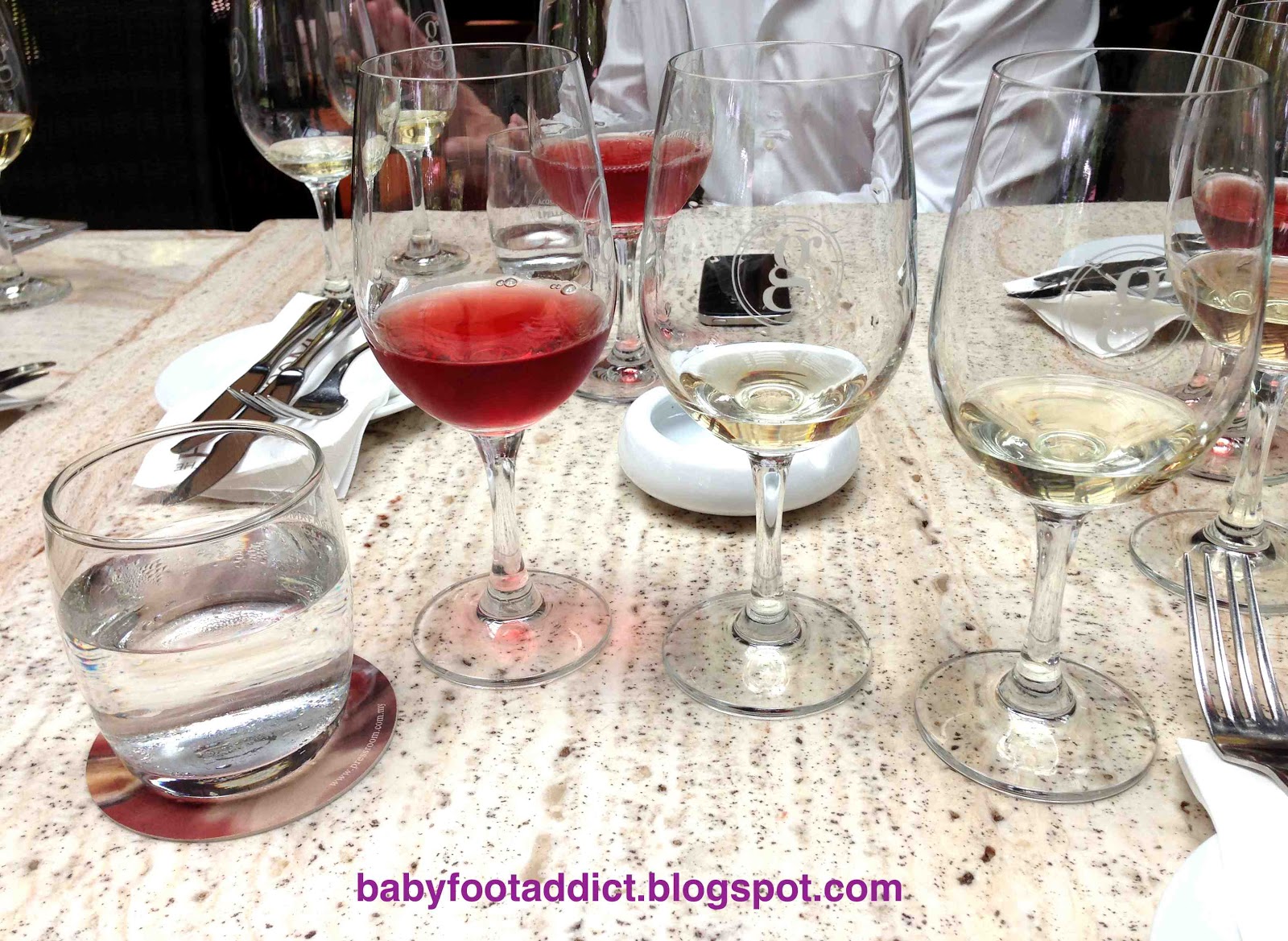
See all the 6 wine samples served by David for me to try? Yummm…

Will share more about the offers plus the exciting part of this event where we had 6, yes, 6 different wines — white, rose and red in Ep 2. Gotta sleep soon as my son has school tomorrow!


Wine Talk’s Sommelier, David Stephan

David Stephan’s bio:

Wine Talk’s sommelier, David Stephan, grew up in a fishing village in the Bretagne region of Western France. He studied hospitality and sommelerie in professional school for 4 years, with internship including stints in various hotels & renowned restaurants of his region or in Paris. In late 1999, a good opportunity allowed him to move to the Caribbean, in the small, exclusive island of St Barthelemy, working in 5-Star Resorts. The island is famous for stunning beaches and locations, but also high-end hotels and restaurants, frequented by the rich and famous. Working two seasons in that hotel, and two more seasons in ‘L’Esprit Salines’, one of the island top restaurants at that time, where he managed a splendid premium wine list. He spent summers in France working in a catering company but also visited diverse wine regions across countries for personal development. In late 2003, he decided that it was time for a change, and started looking for new opportunity that brought him to an interview in Paris for a position in China, which he took. He managed one of the city’s first French Brasserie, and participated to open 2 new outlets. In 2006, he joined a local wine importer& distributor, selling and supplying fine wines to hotels, restaurants and private clients across the country. David fell in love with Malaysia at his 1st visit back in 2006, and if he and his wife were to leave China, it would be the 1st destination targeted. It happened in 2011, when they relocated to Kuala Lumpur, and are now calling it home.
Check out their website for more info:   www.winetalk.com.my

Viña Casablanca Cefiro Chardonnay

My 1stWine Review: Viña Casablanca Cefiro Chardonnay
This is so exciting! My very first wine review. Again, reminder to readers, the opinions written here are purely from the point of view of a consumer who does not have professional or expert background with wines. Not yet.
A brief background about the wine in subject:
Viña Casablanca Cefiro Chardonnay
Vintage: 2010
Country: Chile
Bottle size: 750ml
Alcohol content: 14%
Price: RM65
White wine; fruity and smooth


What the bottle says:
Cefiro, God of the spring breeze manifests all his power in the fruit of this Chardonnay from Casablanca Valley. It is yellow in appearance with amber tinges and pineapple and passion fruit aromas. The palate is striking with its fruit character and balanced acidity. Ideal to accompany all fish and dishes with creamy sauces.
—————————————
And so I opened the bottle, er, technically, my husband did it as I don’t know how to uncork a bottle yet. It has a very pleasant aroma, delicious and enticing, indeed. I served it for dinner with some Chinese food cooked by my mother-in-law. We had some fish, a few other dishes, nothing so spicy.
The wine was wonderful. It’s light and easy, very pleasant and blended well with several dishes. I find the acidity quite lingering, though. It’s not offensive but it stays for a second or two so you would find it notable. For a beginner like me who doesn’t have the palate for complex aromas or tannins yet, this bottle is one of the ideal ones to start with.
We weren’t able to finish the bottle in 1 shot. The men of the house prefer to drink whiskey and beer so it was up to me to finish (oh, thank God for that!). But I also couldn’t take much in a day. I kept the half bottle back in the fridge.
I had a glass for three more dinners and I was surprised that it actually went well with a lot of food. The most notable was with white sauce pasta and lots of cheese (by the way, I’m also a cheese maniac). So the note on the bottle was actually accurate. The packaging was also one of the things that I liked with this Chardonnay. Since it’s a New World wine, this Chilean bottle gave information including the recommended dish to match with it. I find this very useful so I don’t really wonder what aromas or tastes am I getting. And it’s also quite nice to know more about the wine than just simply gulping 14% alcohol…
The verdict: For a sensible, even cheap, price of RM65, I would say that this is a good bottle of Chardonnay to pick from the shelves or order online.

Ep 1: Finally, uncorked.

Well, this is something entirely new to me. But since I started working for a wine company in January this year, it definitely became a mission for me to learn more about this intriguing beverage.
 
I am not much of an alcohol lover before, definitely not a regular drinker in that sense. Of course, I also had those youth days when I drink liquor with friends…Jose Cuervo, Vodka Ice, Gilbey’s Gin, etc. When I was already working and went to bars instead of just drinking at friends’ homes, I got exposed to frozen margarita and it became a personal favorite. But it’s more like having juice rather than real alcohol drinking. I enjoyed a few sparkling wines but not on a regular basis.
I still remember those days in my home country where we order frozen margarita by the pitcher. Yes, it’s much cheaper than here in Malaysia. My husband likes the fact that alcohol is cheap when we were there which to me is a bad thing.  You can just imagine the daily drinking binges that he does there.
Since I arrived here 4 years ago, I barely had drinks. First, it was expensive and then I became a mother so my world totally changed.
But then here I am. Out of curiosity and search for something different to explore, I decided to join the wine industry. Aside from the undeniable truth that wine is simply classy, it will also challenge me to learn and explore something that is completely new to me. 
I already had several wine tastings and I’m so delighted to have a boss who happens to be a GM and sommelier at the same time. So from a total ‘wine idiot’ who knew almost nothing about the drink, I am learning to appreciate the drink bit by bit, getting more interested to understand the heritage and intricate process involved in this beverage. 
So this marks my ‘uncorking’. I’ve started having dinner with a regular glass of wine. Every bottle is something new that I’ve never tried before. Previously had a Chardonnay, Portuguese rosé from an exclusive label, Riesling, Pinot Gris and now browsing for more new wines to buy…and review. I want to share my personal feedback so at least there will be more wine opinions out there from ordinary people like me who are not experts but simply enjoy a glass (or two!) of wines. 
To all wine lovers or to anyone interested with wines, cheers! Wine reviews from a mummy who loves wine (not an expert) coming soon…


Thank Goodness for PediaSure!

Having a child who’s a picky-eater is probably one of the biggest challenges for parents. But having a child who doesn’t want to eat at all is a dilemma. My son is already 3 years and 3 months old but until now, he’s main food every day is just milk. Doctors said that there’s nothing to worry about as he gets sufficient nutrition from milk but I am still worried because he doesn’t eat any meal. He would only taste a bit of this and that then spit after sucking and chewing for a while.


Lucky there’s PediaSure. Long time ago, during my single days, I remember a colleague facing the same problem with his son. Her pediatrician also advised her to give PediaSure and in my home country, this brand is considered very, very expensive. Though hard and heavy on the pocket, parents who have problem-eater kids would still spend and buy this milk. At that time, I actually thought, how could milk be this expensive??? Little did I know that I’d be spending so much every month on the exact product around 8 years later, haha.

My son used to eat a bowl of rice when he was around 12 months. My mother in-law cooked different meals for him every day (lucky for me as I am such an idiot cook). Then suddenly, when he was around 24 months or so, he just didn’t want to eat. After several months of failed attempts to get him back to eating, that’s when we decided to shift to PediaSure. Costing around RM130 per 1.8kg, it was my best option since my son is entirely dependent on milk for his daily nutrition. Until now, he still doesn’t eat much, except for a few slices of cheese, a few bites of cookies or a few strands of mee. I am worried but so far, doctors have assured that he’s doing fine, he’s growing well and his weight is ok. He drinks around 6-7 bottles of 6oz milk everyday, poops once to thrice daily, so he’s pretty much normal.
I’m just thankful that there’s milk for this challenge. Otherwise, I would be panicking on what to feed my son. I’m sure there are a lot of mothers who might be facing the same problem and for me, PediaSure is worth a try and its price. Aden never had problem with his weight, unless he was sick and vomiting for a few days. Our friends still get surprised when we tell them that he doesn’t eat meals and just drinks milk everyday. He looks as healthy and normal as other kids who eat.
I can foresee that I still have more cans of PediaSure to open for Aden. But I really hope and pray that he would start eating proper meals soon. In the meantime, PediaSure is still my son’s best daily meal.